
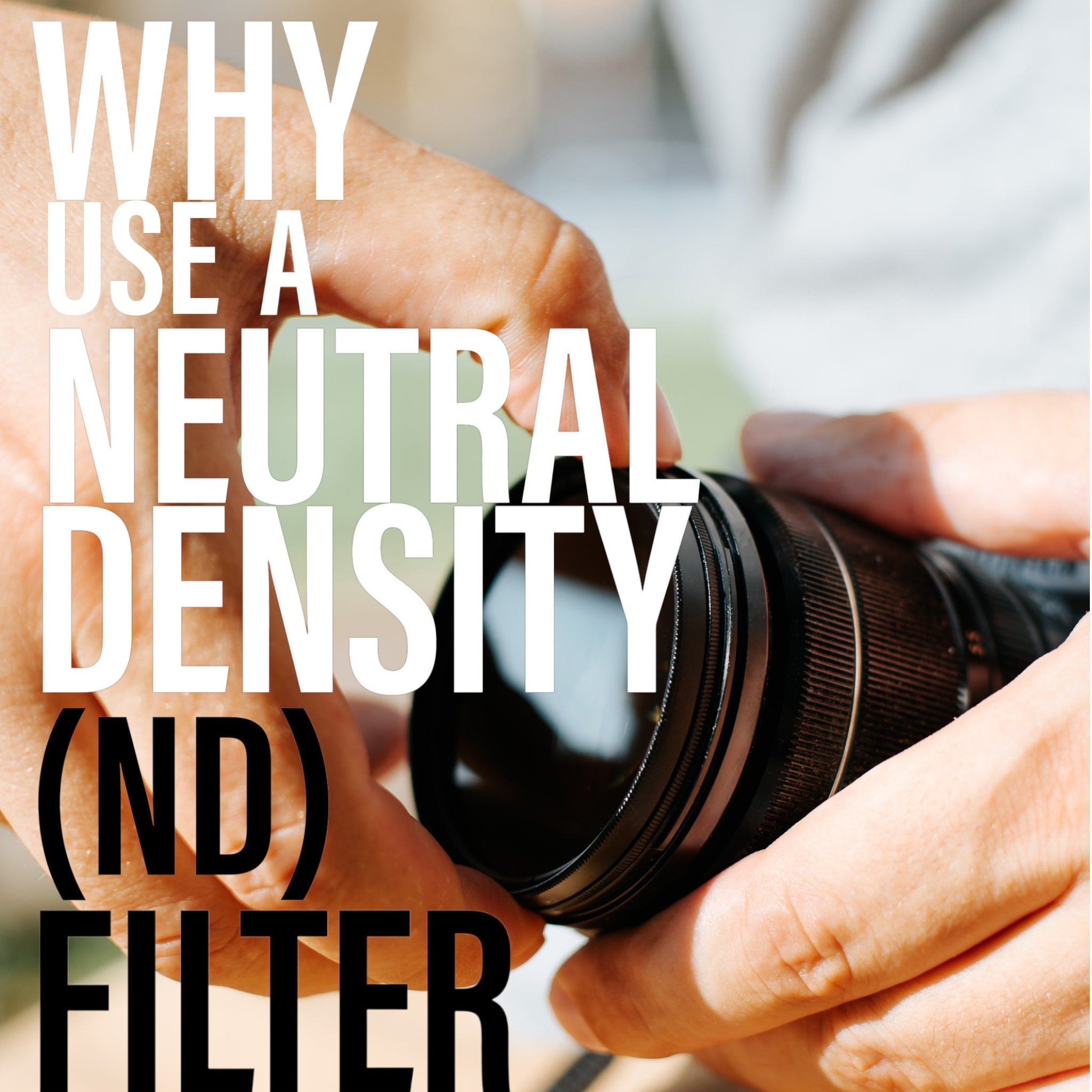
Neutral Density (ND) filters are one of the most valuable accessories any photographer can add to their kit—but why should you buy one in the first place?
Simply put, an ND filter reduces the amount of light entering your lens without affecting colour. This gives you far greater creative control, especially in bright conditions where your camera settings might otherwise be limited. Whether you’re shooting along the Wild Atlantic Way or capturing the movement of Galway’s bustling streets, an ND filter allows you to slow down your shutter speed or open up your aperture to achieve effects that would otherwise be impossible.

What are ND filters used for?
ND filters are best known for enabling long exposure photography. This is how photographers create that beautifully smooth, “silky” water effect in seascapes or rivers—perfect for locations like Salthill or Connemara. They’re also ideal for capturing motion blur in clouds, crowds, or traffic, adding a dynamic feel to your images.

Portrait photographers can benefit too. In bright daylight, an ND filter allows you to use a wide aperture (like f/1.8 or f/2.8) without overexposing your image, helping you achieve that soft, blurred background (bokeh) that makes subjects stand out.
Types of ND filters
When choosing an ND filter, it’s important to understand the different types available:
- Fixed ND filters: These reduce light by a set amount (e.g., ND8, ND64, ND1000). They’re known for delivering consistent image quality and are a great choice for landscapes and long exposures.
- Variable ND filters: These allow you to adjust the level of light reduction by rotating the filter. They’re versatile and convenient, especially for video or changing light conditions.
- Graduated ND filters (GND): These are darker at the top and clear at the bottom, making them perfect for balancing bright skies with darker foregrounds—ideal for sunrise and sunset photography.

Key considerations before buying
Before purchasing an ND filter, make sure you know your lens diameter. This is usually marked on the front of your lens (look for the “Ø” symbol followed by a number, such as Ø67mm or Ø77mm). Choosing the correct size ensures a proper fit.
Quality also matters. A well-made filter will maintain sharpness and colour accuracy, while cheaper options can introduce unwanted colour casts.
Finally, to get the best results—especially for long exposures—a tripod is essential. Slower shutter speeds mean even the slightest movement can blur your image, so stability is key.

Final thoughts
ND filters open up a whole new world of creative possibilities, from dramatic landscapes to professional-looking portraits. At Galway Camera Shop, we stock a carefully selected range of ND filters to suit all levels of photography. Whether you’re just getting started or refining your technique, our team is always here to help you choose the right gear for your next shoot.