
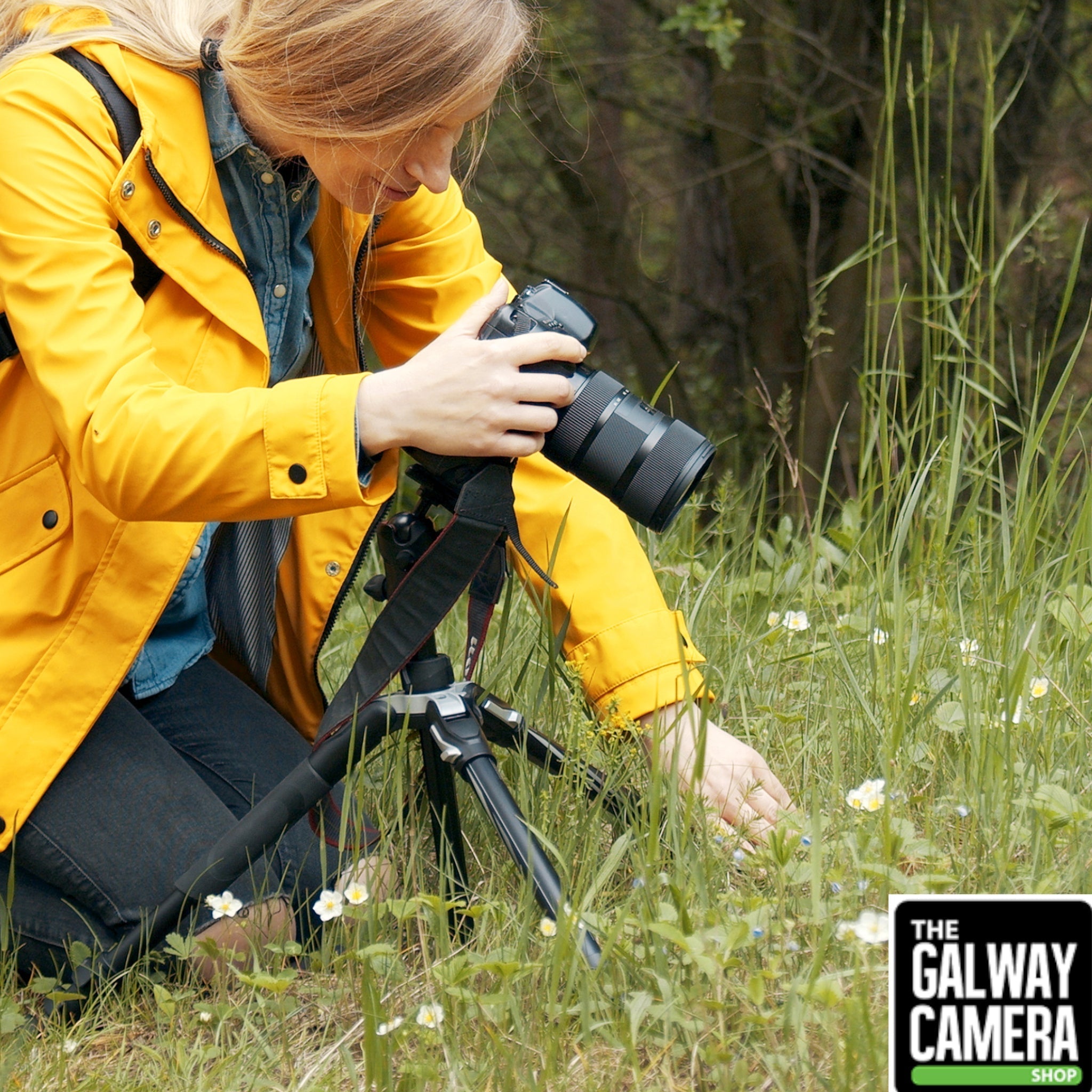
Why Buy a Tripod — and What to Look for When Choosing One
A tripod is one of the most underrated tools in photography—until you start using one. Whether you’re shooting along the Wild Atlantic Way, exploring Galway’s streets at dusk, or creating content for social media, a tripod can dramatically improve both your image quality and your creative options.
Why Buy a Tripod?
At its simplest, a tripod gives you stability—and that stability opens the door to shots that just aren’t possible handheld.
One of the biggest advantages is the ability to shoot at slow shutter speeds without camera shake. This is essential in low-light situations, whether you’re indoors, shooting sunsets, or capturing night scenes. It also allows you to explore long exposure photography, where movement becomes part of the image—like soft, flowing water, streaks of car lights, or moving clouds across the sky.

Tripods are also invaluable for landscape photography. When you’re aiming for maximum sharpness and depth of field, you’ll often use smaller apertures like f/11 or f/16. That reduces your shutter speed, making a tripod essential to keep everything crisp and detailed.

Another benefit is how a tripod improves your approach to composition. When your camera is fixed in place, you naturally slow down and think more carefully about framing. This often leads to stronger, more intentional images.

They’re also incredibly useful for practical shooting scenarios:
Self-portraits and group shots
Video recording and content creation
Time-lapses and panoramas
In short, a tripod doesn’t just hold your camera steady—it gives you more control over how you shoot.
What to Consider When Buying a Tripod?
Once you’ve decided to get a tripod, choosing the right one is key. There are a few important factors to keep in mind to make sure you get something that suits your style of shooting.
Stability is the most important factor. A tripod should feel solid and secure, with minimal flex or wobble. This is especially important if you’re shooting outdoors where wind can be a factor.

Next is load capacity. Make sure the tripod can comfortably support your camera and lens setup. It’s always wise to choose something with a higher rating than your current gear, so you’re covered if you upgrade in the future.

Weight and portability are also crucial considerations. If you plan to travel or hike with your tripod, a lighter model will make a big difference. Carbon fibre tripods are lighter and better at absorbing vibration, while aluminium options are more affordable but tend to be heavier.

Think about the height range as well. A tripod that extends to your eye level means you won’t have to hunch over while shooting. At the same time, having a low minimum height allows for more creative angles and perspectives.

The tripod head is another key component. A ball head is quick to use and very versatile, making it a popular choice for general photography. A pan-tilt 3 way head offers more precise control, which can be useful for video work or more detailed compositions. While a fluid video head offers control and smoother panning for videography.

You should also consider the quick-release system. The larger a plate is the sturdier your equipment will be on the tripod.

Be aware of the centre column. While it can give you extra height when needed, extending it often reduces overall stability. For the sharpest results, it’s best to rely on the tripod legs whenever possible. Some tripods offer the opportunity to use the centre column as a tiltable extension arm, offering more creative control. This feature is very popular in product photography and digital marketing.


There are also a few smaller features that can make a big difference in real-world use:
Leg locks (flip locks vs twist locks—both have their pros and cons)
Feet options for different surfaces like sand, rock, or indoor floors
A hook underneath enables you to hang a bag to add weight for extra stability in windy conditions
Weather resistance, especially if you shoot outdoors regularly

Final Thoughts
A good tripod is an investment in both your image quality and creative freedom. It’s a piece of gear that can last for years and quickly becomes an essential part of your kit.
Why Buy a Monopod over a Tripod?
A monopod is one of those underrated tools—simpler than a tripod, but surprisingly versatile. Here are a few solid reasons to use one, and the kinds of photography where it really shines:
1. Stability without bulk
A monopod reduces camera shake, especially with heavier lenses, but is much quicker to move than a tripod. You get sharper images without being locked into one position.
Best for:
- Sports photography
- Wildlife (especially with long telephoto lenses)
- Event photography
2. Takes the weight off your arms
If you’re using a heavy setup (like a DSLR + 70–200mm or 200–500mm lens), your arms will fatigue fast. A monopod supports the weight so you can shoot longer and more comfortably.
Best for:
- Bird photography
- Motorsports
- Airshows
3. Fast and flexible movement
Unlike a tripod, a monopod lets you pivot, pan, and reframe instantly. That’s crucial when your subject is moving unpredictably.
Best for:
- Action shots
- Street photography (when you want subtle support without being intrusive)
- Weddings and live events
4. Works in tight or crowded spaces
Tripods can be awkward or even banned in busy areas. A monopod takes up minimal space and is often allowed where tripods aren’t.
Best for:
- Concerts and festivals
- Travel photography
- Indoor sports
Quick summary:
A monopod is ideal when you need mobility + support, especially with moving subjects or heavy gear.
If you’re not sure which tripod is right for you, feel free to call into us at Galway Camera Shop at 1 William Street,
or get in touch online: www.galwaycamerashop.com.
Remember we offer free delivery on orders over €150