
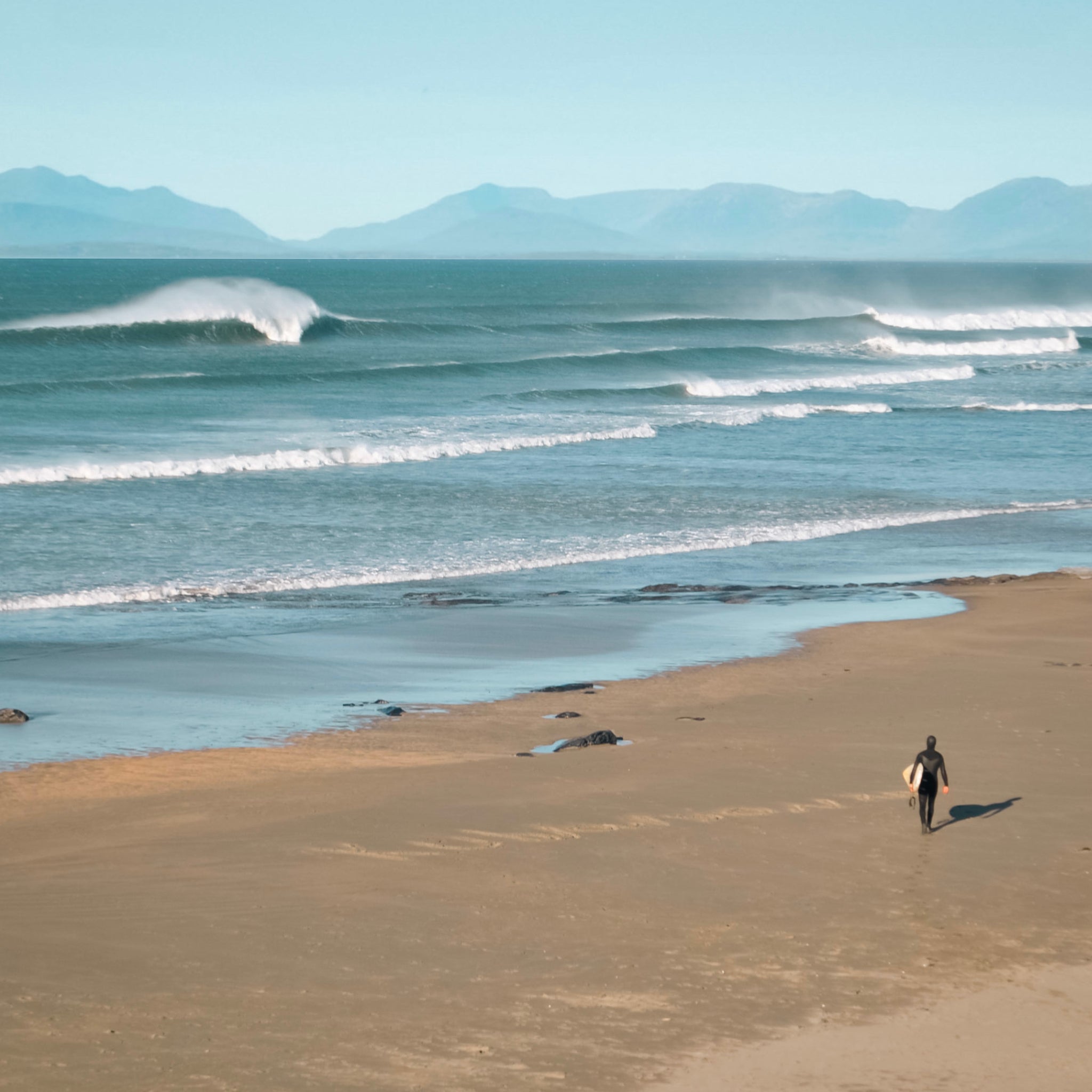
Ireland’s coastline is one of Europe’s most dramatic natural playgrounds, and over the past few decades it has quietly become a world-class surfing destination. What began as a niche pursuit in the 1960s and 70s in places like Lahinch and Bundoran has evolved into a thriving, respected surf culture. Back then, only a handful of dedicated surfers braved the cold Atlantic waters. Today, thanks to major advancements in wetsuit technology and growing global awareness, Irish surfing is firmly on the map.
Unlike the common perception of surfing as a summer activity, Ireland’s best waves arrive in winter. Powerful swells, generated by distant Atlantic storms, travel thousands of miles before hitting the west coast. When conditions align—swell direction, period, wind, and tides—some of the country’s most famous breaks come to life. Locations like Aileens, Riley’s, and Mullaghmore are now recognised worldwide, attracting elite surfers eager to test themselves in heavy, cold-water conditions.
Ireland has also produced an impressive lineup of surfers who continue to raise the standard of the sport, including Conor Maguire, Gearoid McDaid, Richie Fitzgerald, John McCarthy, and Fergal Smith. International icons have also been drawn to Irish waves over the years. Kelly Slater famously described Ireland as a “cold water paradise,” while surfers like Mick Fanning, Kai Lenny, and Nathan Florence have all travelled here in search of its powerful swells.
For photographers, Irish surfing offers a compelling and ever-changing subject. The raw energy of the Atlantic, combined with shifting light and rugged coastal backdrops, creates endless opportunities for striking imagery. But capturing great surf photography requires more than just being in the right place—you need preparation, patience, and an understanding of the ocean.
First, learn to read the conditions. Swell size and direction, wind speed, and tides all influence where waves will break and how they will look. A clean offshore wind, for example, will hold waves up and create those crisp, hollow shapes that make for dramatic shots.
Gear is equally important. A DSLR or mirrorless camera paired with a telephoto zoom lens (200mm–600mm range) allows you to shoot safely from shore while still getting tight, detailed images. A monopod can help stabilise your shots, especially in windy conditions along exposed cliffs. Fast shutter speeds are essential to freeze motion when shooting action.
Light is your secret weapon. Early mornings and late evenings—often called the golden hours—add warmth and depth to your images, while winter storms can produce moody, high-contrast scenes. Don’t be afraid of challenging weather; some of the best surf photography happens in wild conditions.
Positioning is another key factor. Take time to explore vantage points along the coastline. Shooting from elevated positions like cliffs can give you a clear view of wave shapes and surfer lines. Always prioritise safety—Irish coastlines can be unpredictable, and conditions can change quickly.
For those looking to push further, water photography opens up a completely different perspective. Photographers like George Karbus have shown what’s possible by getting into the surf with waterproof housings, capturing the intensity from within the lineup. However, this requires strong swimming ability, ocean awareness, and the right equipment.
Ultimately, surf photography in Ireland is about timing, knowledge, and respect—for both the ocean and the athletes riding it. When everything aligns, you’re not just capturing a wave; you’re documenting a fleeting moment of power, skill, and connection with nature. And along Ireland’s Atlantic edge, those moments are never in short supply.